Knife Skills Basics: Five Cuts Every Home Cook Needs
The short version of our Knife Skills Bootcamp: how to hold a knife, keep it sharp and make the five cuts you'll use every week.
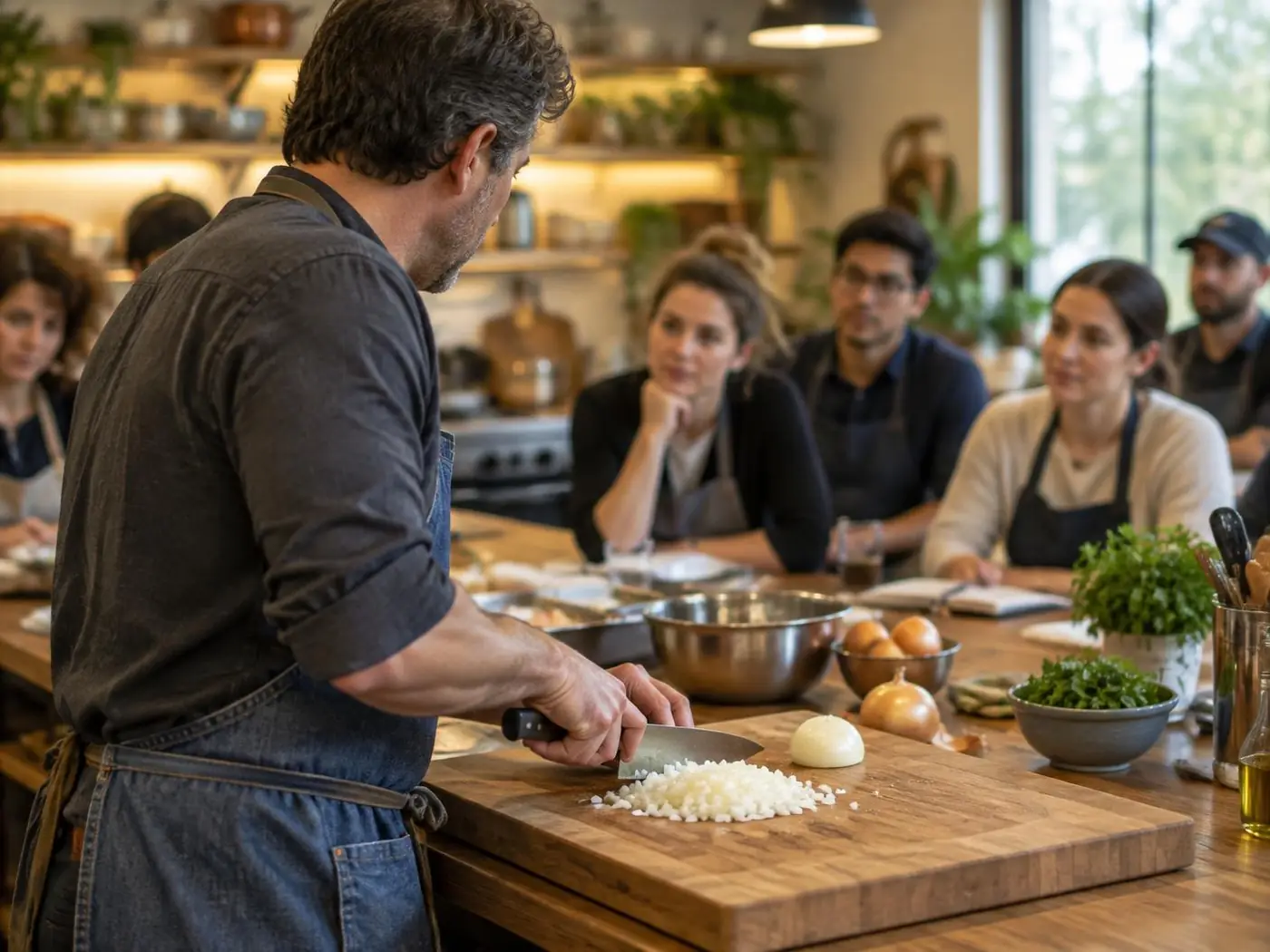
Most people who are “bad at cooking” are really just slow at chopping. Prep takes forever, so cooking feels like a chore. Fix the knife work and everything else gets easier. This is the short version of our two-hour Knife Skills Bootcamp.
The only three knives you need
- An 8-inch chef's knife for 90% of the work. Pick one that feels balanced in your hand; it doesn't need to be expensive.
- A paring knife for small, in-hand jobs like hulling strawberries.
- A serrated bread knife for bread and ripe tomatoes.
Hold it like this
The pinch grip: pinch the blade just in front of the handle between your thumb and the side of your index finger, then wrap your other fingers around the handle. It feels odd for a day and then you'll never go back. It gives you far more control than holding the handle like a hammer.
The claw: on your other hand, curl your fingertips under so your knuckles face the blade. The flat of the knife rides against your knuckles, and your fingertips stay out of the way.
The five cuts
1. Dicing an onion
- Cut the onion in half through the root. Peel, leaving the root end on; it holds the layers together.
- Lay a half flat. Make vertical cuts toward the root, stopping just short of it.
- Make one or two horizontal cuts parallel to the board (optional for small onions).
- Slice across the vertical cuts. The dice falls away. Toss the root.
2. Mincing garlic
Smash the clove with the flat of the blade to loosen the peel. Slice thinly, then rock the knife back and forth over the pile, keeping the tip on the board. Sprinkle a pinch of salt to stop it sticking and smear it into a paste if a recipe calls for it.
3. Chiffonade (herbs and greens)
Stack basil, sage or spinach leaves, roll them up tightly like a cigar and slice across the roll into thin ribbons.
4. Julienne
Cut a carrot or pepper into 2–3 inch lengths, square off the sides so it sits flat, slice into planks about ⅛ inch thick, stack the planks and cut into matchsticks.
5. Rough chop
For soups, stocks and anything that gets blended. Aim for pieces about the same size so they cook evenly. Perfect shapes don't matter here.
Cut sizes cheat sheet
| Cut | Size | Use it for |
|---|---|---|
| Mince | Less than ⅛ inch | Garlic, ginger, shallots |
| Small dice | ¼ inch | Salsas, sauces, fried rice |
| Medium dice | ½ inch | Soups, sautés, roasted vegetables |
| Large dice | ¾ inch | Stews, sheet-pan dinners |
| Julienne | ⅛ × ⅛ × 2–3 inches | Stir-fries, slaws, garnishes |
Keeping it sharp
Honing (the steel rod) straightens the edge and should happen every few uses. Sharpening removes metal to make a new edge; for most home cooks, once or twice a year is plenty. A sharp knife is a safer knife: it goes where you aim it instead of slipping off a tomato skin.
Never put a good knife in the dishwasher. Wash it by hand, dry it right away and store it on a magnetic strip or in a block, not loose in a drawer.